Choosing between the Castro and Mission Dolores can feel like picking between two great versions of city life. You want a central, walkable neighborhood with character, but the right fit depends on your vibe, budget, and day-to-day routine. In this guide, you’ll compare housing types, price snapshots, nightlife and daytime culture, transit, and microclimate to see which area matches your lifestyle. Let’s dive in.
Quick take: Castro vs Mission Dolores
If you picture an iconic San Francisco night out, the Castro likely comes to mind. It is a historic LGBTQ+ cultural center with an active commercial strip, signature venues like the Castro Theatre, and a city-supported entertainment corridor that encourages street life and events in Upper Market and the Castro (Castro Upper Market Entertainment Zone). Expect a lively, event-driven feel, especially after dark.
Mission Dolores is organized around Dolores Park. On sunny days, the hillside lawns fill with picnics and people, and the nearby 18th Street and Valencia corridors buzz with food and casual hangouts. If your perfect weekend starts with a pastry at Tartine and ends with ice cream from neighborhood classics like Bi-Rite Creamery, Mission Dolores may feel like home. The park itself is a beloved anchor that can draw large crowds on warm weekends (Mission Dolores Park overview).
Housing types and price snapshots
What you will see on each block
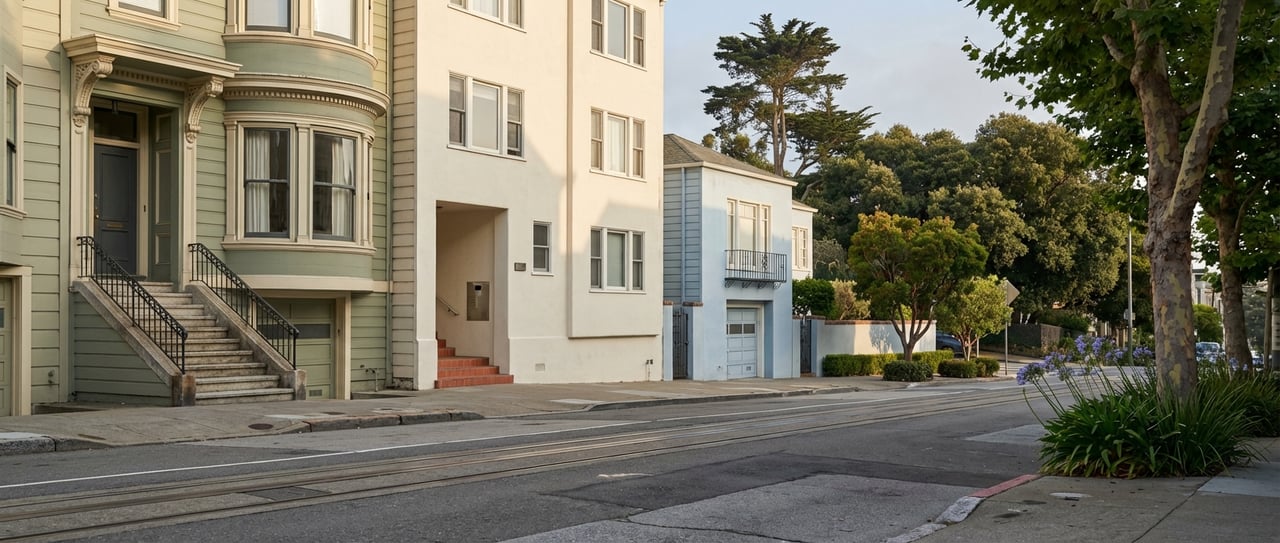
Both neighborhoods mix late 19th and early 20th century Victorians and Edwardians with two- to four-unit apartment buildings and modernized or converted condos. Character changes quickly block by block in central San Francisco. Near the main commercial corridors, you will see denser low-rise buildings with ground-floor retail. Closer to Dolores Heights and the hillier edges by the park, you will find more small detached homes or large flats on stepped, view-friendly lots.
Current median sale prices
- Castro median sale price: about $1.7 million (Redfin median, Jan 2026).
- Mission Dolores median sale price: about $1.3 million (Redfin median, Dec 2025).
Different portals report different medians because they use different inputs and boundaries. Use these as labeled snapshots, not final pricing. For real decisions, you will want recent local comps and on-the-ground context.
Entry points and premium pockets
Smaller condos and TICs tend to offer lower entry points than detached homes. Condition, size, light, outlook, and proximity to signature amenities like Dolores Park can swing values. Homes on the Dolores Heights slopes or with park views often trade at a premium compared to neighborhood condo medians. If you know the location type you want, previewing a few recent closed sales will sharpen your expectations quickly.
TIC vs condo vs house: what to know
Ownership type affects financing, monthly costs, and resale. Here is a quick plain-English guide:
Pro tip: If you are open to TICs, get pre-approved with a TIC-savvy lender early. That way, you can write offers confidently when the right unit appears.
Nightlife and daytime feel
If you love big nights out
The Castro offers a concentrated mix of bars, venues, and community institutions anchored by the historic Castro Theatre, which saw reopening events in early 2026. The city actively promotes entertainment in Upper Market and the Castro, so you can expect festivals, performances, and evening energy that draw both locals and visitors (entertainment zone details). That nightlife comes with busier sidewalks and more late-night foot traffic near Castro and Market.
If you live for sunny park days
Mission Dolores centers on daytime outdoor life. Dolores Park is a two-block hillside with sweeping views that fills up on sunny weekends. Around the park, the food scene is a major draw, from coffee and pastry lines in the morning to casual dinner spots and dessert stops like Bi-Rite Creamery. If your social life is more picnic blanket and restaurant booth than late-night bar crawl, Mission Dolores will likely fit your rhythm.
Transit and getting around
Castro access and Muni Metro
The Castro and Upper Market corridor functions as a transit hub. You will find multiple Muni lines, including F Market and J Church, with quick Muni Metro connections downtown. For a route snapshot and neighborhood overview, review the SFMTA’s Castro / Upper Market page.
Mission Dolores and BART
The J Church runs along the park’s western edge, and the Mission corridor has convenient access to the 16th St. Mission and 24th St. Mission BART stations. If you rely on BART for regional trips, Mission Dolores can be slightly easier than the Castro. Both neighborhoods are highly walkable, and many daily needs are within a short stroll or bike ride. Parking is competitive in both areas, so factor that into your plans if you own a car.
Microclimate: the sunny side of the park
Dolores Park sits in one of the city’s warmer, sunnier microclimates, often described as part of the Mission’s sunbelt (park overview). Dolores Heights benefits from shelter from Twin Peaks, which can reduce fog and wind compared to areas just a few blocks away. The Castro and Eureka Valley still see plenty of sun, but exposure can change quickly by block and elevation. Always visit candidate homes on multiple days and times to experience light, wind, and fog firsthand.
Which neighborhood fits your style and budget
Choose the Castro if you value
- Immediate access to nightlife, events, and a historic cultural core.
- A lively commercial strip with frequent performances and visitor energy.
- Quick Muni Metro access downtown from Castro and Market.
- Condos and TICs near the action, with awareness of evening noise and foot traffic.
Choose Mission Dolores if you value
- A park-first lifestyle with frequent sunny afternoons.
- A strong restaurant and casual hangout scene around 18th Street and Valencia.
- Slightly easier access to BART for regional commutes.
- Condos near the park, and potential small single-family options on the Dolores Heights slopes.
How to decide: a weekend field test
- Visit both neighborhoods on a sunny weekend and a foggy weekday morning.
- Spend an hour on the edge of Dolores Park, then walk 18th Street and Valencia.
- Catch an evening in the Castro and walk Castro Street and Market after dinner.
- Note block-level differences in light, wind, street noise, and parking. Bring your must-have list and see how each area feels against it.
Ready to compare homes with a local advisor?
If you want clear pricing context, help weighing TIC vs condo tradeoffs, or a game plan for winning the right home, let’s talk. Request a private consultation with Michelle Pender to map the best streets, tour smart options, and move forward with confidence.
FAQs
What are the biggest lifestyle differences between the Castro and Mission Dolores?
- The Castro centers on nightlife, events, and a historic cultural scene anchored by the Castro Theatre, while Mission Dolores revolves around sunny days at Dolores Park and a strong food corridor on and around 18th Street.
Is Mission Dolores more affordable than the Castro right now?
- Snapshot medians suggest yes: Castro is about $1.7M (Redfin median, Jan 2026) and Mission Dolores is about $1.3M (Redfin median, Dec 2025). Medians vary by portal, so request recent local comps for precise guidance.
How do TICs differ from condos in San Francisco?
- TICs are fractional interests in a multi-unit building with exclusive unit rights; financing is often specialized and the buyer pool can be smaller than for condos. Condos usually have broader conventional loan options and a wider resale audience. Review the city’s condominium conversion restrictions if you are hoping to convert a TIC.
Which neighborhood has better transit access for commuters?
- Both are strong. The Castro offers quick Muni Metro access along Market and the SFMTA network. Mission Dolores has the J Church and closer access to 16th St. Mission and 24th St. Mission BART stations for regional trips.
How does the microclimate around Dolores Park affect daily life?
- Dolores Park often enjoys sunnier, warmer conditions than nearby blocks, which is a big reason the lawns fill on nice days. Always visit homes on different days and times to confirm light and wind on the exact block you are considering.