Thinking about buying a small multi-family building in the Inner Mission? You are not alone. This pocket of San Francisco draws investors because it blends classic building stock, strong transit access, and a large supply of 2 to 4 unit properties, but it also comes with rules and risks that can quickly change the math. If you want to invest with more confidence, it helps to understand what makes this submarket different before you write an offer. Let’s dive in.
Why Inner Mission draws small investors
The Inner Mission benefits from many of the same traits that make the broader Mission Planning District attractive to buyers and investors. San Francisco Planning describes the Mission as a transit-served, mixed-use neighborhood that developed as one of the city’s first streetcar suburbs. That history matters because it shaped the building patterns you still see today.
For small investors, one of the biggest draws is the neighborhood’s housing mix. The city’s 2022 Housing Inventory shows the Mission is among San Francisco’s top districts for 2 to 4 unit buildings. That creates more opportunities for buyers looking for a manageable multi-family asset instead of a large apartment building.
Just as important, these properties often offer flexibility in how you think about ownership. You may be looking for rental income, a long-term hold, or a live-in investment strategy. In the Inner Mission, the building types often support those goals, but each property needs careful underwriting.
Common Inner Mission building types
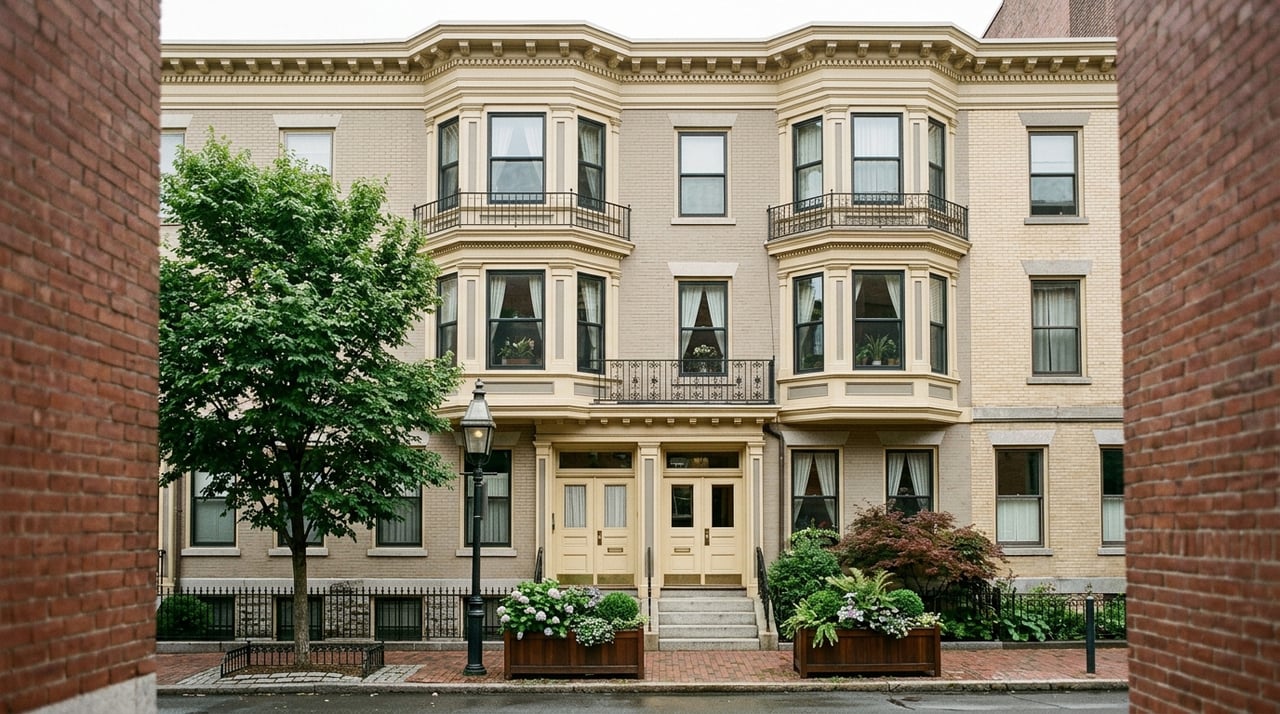
Many small multi-family properties in the Inner Mission are older wood-frame buildings on narrow lots. They are often two to three stories and may have separate street-facing entrances. That layout can appeal to both owner-users and investors because it creates a more independent feel for each unit.
You will also see double-bay and triple-bay Romeo flats, sometimes arranged as four-unit or six-unit buildings around a central stairwell bay. Some structures started as single-family homes and were later divided into flats, apartments, or boarding houses. Mixed-use corner buildings with apartments above retail also show up in the local inventory.
Architecturally, the area reflects San Francisco’s older housing stock. Victorian, Edwardian, Classical Revival, Mission Revival, and early Craftsman styles are all part of the neighborhood fabric. For an investor, that character can be a selling point, but older construction also means more diligence around condition, permits, and systems.
Rent control is your first screening tool
When you evaluate a small multi-family deal in San Francisco, one of the first questions should be simple: Is the building covered by the Rent Ordinance? According to San Francisco Rent Board forms, if a building was constructed after June 13, 1979, the rental unit is not subject to the Rent Ordinance.
That date can have a major impact on your income assumptions. In covered units, annual rent increases are limited once a tenancy exists. For the period from March 1, 2026 through February 28, 2027, the current allowable rent increase is 1.6%.
San Francisco does allow an owner to set the initial rent freely when renting an empty covered unit. After that, annual increases are capped for an occupied unit. That means turnover can improve income in some cases, but relying on quick rent growth from in-place tenants is usually not realistic.
Why turnover assumptions matter
A small Inner Mission building can look attractive on paper if you assume units will turn over quickly and rents will reset fast. In practice, you need to be conservative. San Francisco’s tenant protections, eviction rules, and Ellis Act-related requirements can affect notice periods, relocation obligations, and re-rental restrictions.
That does not mean deals do not work here. It means your model should reflect the actual tenancy profile and likely timing, not a best-case scenario. A building with long-term tenants, below-market rents, and older systems may still be a strong hold, but only if you buy with clear eyes.
What cap rates really tell you
Market cap rate surveys can help you frame expectations, but they should never be your only guide. CBRE’s H2 2025 survey places San Francisco multifamily infill cap rates at 4.5% to 5.0% for stabilized assets and 4.75% to 5.25% for value-add deals. Those are useful benchmarks, but they are only a starting point.
Recent market data also suggests a more selective environment. Kidder Mathews reported that in the first quarter of 2026, San Francisco vacancy rose to 5.3%, average asking rent fell 3.0% year over year to $2,652 per unit per month, and average sales price per unit fell 18% year over year to $323,825. That combination points to a market where pricing and assumptions need discipline.
For an Inner Mission 2 to 4 unit building, the headline cap rate may not reflect the real story. In-place rent control, tenant history, deferred maintenance, and vacancy assumptions can push the practical return profile above or below the broader market range. The smart move is to underwrite the actual asset, not the average survey number.
Due diligence matters more here
Small buildings in the Inner Mission often need deeper review than buyers expect. The neighborhood combines historic housing stock, local regulation, and aging building systems in a way that can create surprises. A fourplex may be small in unit count, but it can still have a very layered risk profile.
Start with the basics and verify them early. Confirm the construction date, legal unit count, and whether the building is covered by the Rent Ordinance. That step alone can immediately change your view of future income and value.
Next, review the rent roll and tenancy history in detail. If a seller is projecting upside, compare that claim against current occupancy, actual rents, and realistic turnover assumptions. In San Francisco, the timing of income changes matters just as much as the amount.
Permit history is another key item. San Francisco Planning notes that historic resources in the Mission are vulnerable to deterioration from age and neglect, and unpermitted alterations can affect significance. For you, that means it is important to compare current conditions with approved work before closing.
Physical inspections also deserve extra attention. Many buildings in this area are older wood-frame structures on deep, narrow lots, which often translates to deferred maintenance, moisture issues, aging plumbing or electrical systems, and nonstandard layouts. Converted garages and accessory spaces should be reviewed especially carefully.
A practical due diligence checklist
Before you move forward on an Inner Mission multi-family purchase, make sure you review:
- Construction date
- Legal unit count
- Rent Ordinance coverage
- Full rent roll
- Tenancy history
- Vacancy assumptions
- Permit history
- Roof condition
- Foundation condition
- Plumbing and electrical systems
- Moisture intrusion risks
- Any converted garage or accessory areas
- Rent Board fee status
- Housing Inventory reporting status
- Rent increase license compliance
This list will not answer every question, but it can help you avoid the most common underwriting blind spots.
Do not overestimate capital improvement upside
Some investors look at needed work and assume the cost can be quickly pushed through to tenants. In San Francisco, that is not a safe assumption. The city states that capital improvement petitions must be filed within five years of completion, and the forms differ for properties with 1 to 5 units and 6 or more units.
That means timing and documentation matter. It also means capital work should not automatically be treated as immediate NOI growth. If your deal only works because you expect a fast pass-through, you may need to revisit the underwriting.
Compliance checks before closing
Another common miss in small multi-family deals is operational compliance. San Francisco requires owners to report into the Rent Board Housing Inventory before obtaining a rent increase license. For condominiums and buildings with 1 to 9 residential units, that license rule applies to increases effective on or after March 1, 2023.
You should also confirm whether the seller is current on annual Rent Board fees and related reporting obligations. These are not glamorous line items, but they are part of real operating costs and real compliance risk. A careful pre-close review can save you time and frustration after the keys are delivered.
How to think about an Inner Mission deal
The best Inner Mission investments usually make sense for more than one reason. Maybe the current income is solid, the unit mix fits your hold strategy, and the building sits in a transit-served, supply-constrained part of San Francisco. Maybe there is future upside, but the deal does not rely on aggressive assumptions to perform.
That is usually the right mindset here. Buy for durability, not just projected upside. In a submarket with historic buildings, rent regulation, and nuanced local rules, careful analysis tends to outperform optimism.
If you are weighing an Inner Mission multi-family opportunity, working with someone who understands San Francisco’s micro-markets can help you ask better questions before you commit. For tailored guidance on buying, selling, or evaluating a small investment property in San Francisco, connect with Michelle Pender.
FAQs
Is an Inner Mission building built after June 13, 1979 under rent control?
- According to San Francisco Rent Board forms, rental units in buildings constructed after June 13, 1979 are not subject to the Rent Ordinance.
Can you reset rent when a tenant moves out of an Inner Mission unit?
- Usually yes for the initial rent of an empty covered unit, but once a tenancy begins, annual increases on occupied units are capped under San Francisco rules.
What cap rate should you expect for Inner Mission multi-family?
- San Francisco multifamily infill benchmarks reported by CBRE were 4.5% to 5.0% for stabilized assets and 4.75% to 5.25% for value-add, but an individual Inner Mission deal can vary based on rent control, tenant history, vacancy, and condition.
Why do Inner Mission 2 to 4 unit buildings need deeper due diligence?
- Many combine older wood-frame construction, historic character, local rent regulation, tenant protections, aging systems, and possible permit or layout issues, so small size does not always mean simple underwriting.
Are capital improvements a fast way to raise NOI in San Francisco multi-family?
- Usually not, because capital improvement rent increases require a city petition, must meet timing rules, and should not be assumed to create immediate income.
What should you verify before closing on an Inner Mission multi-family property?
- You should confirm the construction date, legal unit count, rent roll, tenancy history, permit history, physical condition, Rent Board fee status, Housing Inventory reporting, and rent increase license compliance.